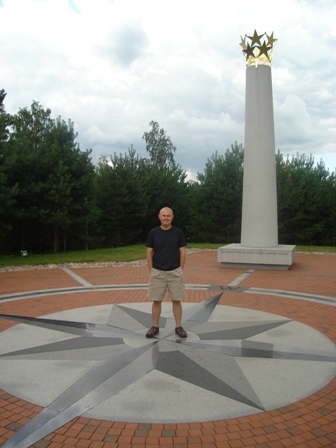
The "official" geographical centre of Europe, Radžiuliai/Purnuškės
(25 km north of Vilnius, Lithuania)
Curriculum Vitae
Research Interests
Publications
"My Citations" (Google Scholar)
Major Research Projects
"Since the 1970s, the politics of "neo-liberalism," based on the purported concern to minimize state interference in the economy and thus to unleash "free" markets, have been mobilized at various sites and scales across the world economy. This book provides useful intellectual tools for deciphering the ideological, social and institutional foundations of neoliberalism and its wide-ranging implications for the still ongoing regulatory reorganization of capitalism." - Neil Brenner, Professor of Sociology, New York University, USA
"This is an outstanding book not only because of the sophisticated critiques offered by some of the most highly regarded thinkers on the topic of the destruction and misery wrought through neoliberal capitalism, but also because its forward looking emphasis on a more egalitarian and hopeful future offers insights about the work that needs to be done by activists and scholars alike. Moreover, this book helps us recognize that the emergence of any talk of a post-neoliberal era is premature beyond helping to construct a road map for ways citizens of the world can collectively, and deliberately, move forward." - Nik Heynen, Associate Professor of Geography, University of Georgia, US
"This timely and wide ranging book traces the changing contours of neoliberalism, demonstrating how market-oriented policies gave rise to a globally hegemonic political-economic project. The emphasis is on identifying the different forms neoliberalism takes and the diverse responses to it. At a juncture when this political-economic project is under increasing scrutiny from supporters and opponents alike, the book challenges existing conceptions of neoliberalism and makes an important contribution to the reinvigorated search for political alternatives." - Wendy Larner, Professor of Human Geography and Sociology, University of Bristol, UK
"A timely volume on the nature, varied manifestations, and above all limitations of an economic order that is failing so spectacularly with the financial crisis. Highly recommended for academics, students, or for that matter anyone interested in the politics of our times." - Magnus Ryner, Professor of International Relations, Oxford Brookes University, UK
"A great collection of essays" - Alan O'Connor, Director of Cultural Studies, Trent University, Canada
"A valuable set of essays" - Environment and Planning A, Vol. 42 (9), Sept 2010, p. 2037
"Provides useful insights on the rise to power of neoliberalism to its present state as a beast that lies wounded in front of our eyes" - Socialist Review, October 2010
"Brilliantly analysed ... a clear, highly informative, and even entertaining collection ... a fine epitaph for neoliberalism, the political economy of the undead" - The Hindu, 11 January 2011
"An important contribution to the current debate" - Baltic Worlds, Vol. 2, 2011, pp. 59-60
"Writing on neo-liberalism today is an enormous challenge ... This book manages that risk in a very satisfactory way" - Journal of Contemporary European Studies, Vol. 19 (4), 2011, pp. 568-569.
"The neoliberal zombie may limp along, but thoughtful interventions like this help us better understand what a proper death might look like" - Critical Discourse Studies, Vol. 10(1), 2013, pp. 117-119.
Vlad Mykhnenko / Влад Михненко
Email: vlad.mykhnenko@gmail.com
EMPLOYMENT & EDUCATION
2012 – present: Lecturer in Human Geography (Urban Adaptation and Resilience), School of Geography, Earth & Environmental Sciences, University of Birmingham, UK
2015: P.C.A.P. (Postgraduate Certificate in Academic Practice), Centre for Learning and Academic Development, University of Birmingham, UK
2014 – 2015: Visiting Professor, Al-Farabi Kazakh National University, Almaty, Kazakhstan
2008 – 2011: Research Fellow & Principal Investigator, School of Geography, University of Nottingham, UK
2005 – 2008: Research Fellow, Centre for Public Policy for Regions, Department of Urban Studies, University of Glasgow, UK
2005: Ph.D. (Political Economy), Darwin College & the Faculty of Human, Social, and Political Science, University of Cambridge, UK
2003 – 2004: International Policy Fellow, Open Society Institute, Budapest, Hungary
1999: M.A. International Relations and European Studies, Department of International Relations and European Studies, Central European University, Budapest, Hungary
1998: M.A. International Relations, Institute of International Relations, Taras Shevchenko National University of Kyiv, Ukraine
1996: B.A. International Relations, Institute of International Relations, Taras Shevchenko National University of Kyiv, Ukraine
RESEARCH AGENDA
As an Economic Geographer, I am committed to the advancement of geographical political economy,
focussing on modern capitalist social formations as spatially uneven, highly
variegated, and crisis-driven systems. Building upon theoretical underpinnings,
following epistemological insights, and combining methods of Spatial Economic Analysis, Urban and Regional Studies, and Comparative Political Economy, I explore the interrelationship
between spatial imbalances in production and consumption, spatial disparities
in human development, power inequalities, and territorial cohesion.
Empirically, I work with the data gathered both in the Global South (including post-communist transition countries, BRICS, and emerging market economies), and the Global North, covering high-income industrially advanced OECD countries. My current research is focussed on the following four subject areas:
- Urban and regional economies: economic resilience and shrinking cities; de-industrialisation, re-industrialisation, and the urban knowledge economy;
- Local government finance, fiscal federalism, and devolution: the spatial distribution of national income; local government finance; urban austerity and fiscal resilience;
- Regional development, policy, and governance: economic convergence and divergence; regional governance; territorial cohesion; the EU cohesion policy; and
- Sustainable urbanism in the Global South.
IMPACT: POLICY AGENDA
As a Policy Expert on Urban Services and Technology, I advise Habitat III -The United Nations Conference on Housing and Sustainable Urban Development - in shaping the New Global Urban Agenda for the 2016-2036 period. For more details, please, click here.

PUBLICATIONS
Mykhnenko, V. (Forthcoming 2016). Resilience: A Right-Wingers’ Ploy? In S. Springer, K. Birch & J. MacLeavy (Eds.), The Handbook of Neoliberalism (pp. 176-192). Routledge. ISBN: 978-1138844001. Click here to download the proofs.
Haase, A., Bernt, M., Großmann, K., Mykhnenko, V., & Rink, D. (2016). Varieties of shrinkage in European cities, European Urban and Regional Studies, Vol. 23 (1), pp. 86-201 doi: 10.1177/0969776413481985. Click here to download.
Mykhnenko, V. (2015). Die ökonomische Bedeutung des ukrainischen Donbass. Ukraine-Analysen, No.147 (March), pp. 2-12. Click here to download. [In German]
Haase, A., Rink, D., Grossmann, K., Bernt, M. & Mykhnenko, V. (2014) Conceptualizing urban shrinkage. Environment and Planning A, Vol. 46 (7), pp. 1519-1534. doi: 10.1068/a46269. Click here to download.
Birch, K. & Mykhnenko, V. (2014). Lisbonizing versus financializing Europe? The Lisbon Agenda and the (un)making of the European knowledge-based economy, Environment and Planning C: Government and Policy, Vol. 32 (1), pp. 108-128. doi:10.1068/c1246r. Click here to download.
Grossmann, K., Bontje, M., Haase, A. & Mykhnenko, V. (2013) Shrinking cities: notes for the further research agenda, Cities, Vol. 35 (December), pp. 221-225. doi:10.1016/j.cities.2013.07.007. Click here to download.
Mykhnenko, V. (2013). Die räumliche Differenzierung der ukrainischen Wirtschaft. Die regionale Ebene. Ukraine-Analysen, No.111 (January), pp. 2-9. Click here to download. [In German]
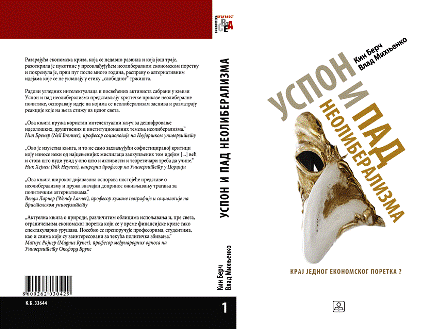
Кин Берч и Влад Михњенко (2012). Успон и пад неолиберализма: крај једног економског поретка? Београд: Завод за уџбенике, 325 pages. ISBN: 978-8617179241. (Amazon.co.uk). [In Serbian]
Mykhnenko, V., Soldak, M., Kuzmenko, L., and Haase, A. (2012) 'Schrumpfende Ukraine: Bevölkerungsentwicklung und Dilemmata der Politik', Ukraine-Analysen, No. 105 (June), pp. 2-14. Click here to download. [In German]
Mykhnenko, V., Padvalkava, K., Kuzmenko, L., Soldak, M., & Myedvyedyev, D. (2012). The governance of shrinkage in Donetsk and Makiivka (Ukraine): the case of local government finance. Shrink Smart: The Governance of Shrinkage within a European Context (Revised ed., 118 pp.). Birmingham: School of Geography, Earth and Environmental Sciences, University of Birmingham. Click here
Dieter Rink, Petr Rumpel, Ondrej Slach, Caterina Cortese, Alberto Violante, Paolo Calza Bini, Annegret Haase, Vlad Mykhnenko, Bogdan Nadolu, Chris Couch, Matthew Cocks, Robert Krzystofik. (2012). Governance of shrinkage: lessons learnt from analysis for urban planning and policy. Shrink Smart: The Governance of Shrinkage within a European Context (47 pp.). Leipzig: Helmholtz Centre for Environmental Research – UFZ, Leipzig. Click here to download.
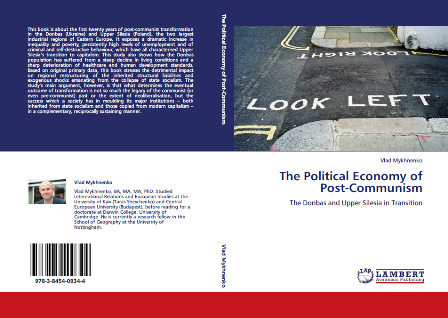
Mykhnenko, V. (2011) The Political Economy of Post-Communism: The Donbas and Upper Silesia in Transition. Saarbrücken: Lambert Academic Publishing, 244 pages. ISBN: 978-3845409344 (Amazon.co.uk). Click here to download the proofs.
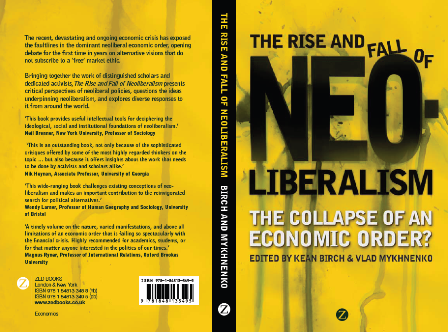
Birch, K. and Mykhnenko, V., eds. (2010) The Rise and Fall of Neoliberalism: The Collapse of an Economic Order? London: Zed Books, 288 pages. ISBN: 978-1848133495 (paperback). ISBN: 978-1848133488 (hard cover).
[Reprinted in India as Birch, K. and Mykhnenko, V., eds. (2010) The Rise and Fall of Neoliberalism: The Collapse of an Economic Order? Bangalore: Books for Change, 288 pages. ISBN: 978-8182910900.]
Birch, K., & Mykhnenko, V. (2010). Introduction: a world turned right-way up. In K. Birch & V. Mykhnenko (Eds.), The Rise and Fall of Neoliberalism: The Collapse of an Economic Order? (pp. 1-20). Zed Books. Click here to download.
Swain, A., Mykhnenko, V., & French, S. (2010). The Corruption industry and transition: neoliberalizing post-Soviet space? In K. Birch & V. Mykhnenko (Eds.), The Rise and Fall of Neoliberalism: The Collapse of an Economic Order? (pp. 112-132). Zed Books. Click here to download.
Mykhnenko, V., & Birch, K. (2010). Conclusion: the end of an economic order? In K. Birch & V. Mykhnenko (Eds.), The Rise and Fall of Neoliberalism: The Collapse of an Economic Order? (pp. 255-268). Zed Books. Click here to download.
Mykhnenko, V. and Swain, A. (2010). Ukraine’s Diverging Space-Economy: The Orange revolution, post-soviet development models and regional trajectories, European Urban and Regional Studies, Vol. 17, No. 2 (April), pp. 141-165. Click here to download.
Михненко, Влад. (2010) Неолібералізм в містах: множинність проявів та можливі альтернативи. Спільне: журнал соціальної критики. – №2. – С. 18-21. Для завантаження натисніть сюди. [In Ukrainian]
Mykhnenko, V., Myedvyedyev, D., & Kuzmenko, L. (2010) Urban shrinkage in Donetsk and Makiïvka, the Donetsk conurbation, Ukraine. Shrink Smart: The Governance of Shrinkage within a European Context (Final ed., 81 pp.). Nottingham: School of Geography, University of Nottingham. Click here to download.
[Translated as Михненко, В., Кузьменко, Л. и Медведев, Д. (2010) Убывание в городах Донецк и Макеевка, Донецкая городская агломерация, Украина: Доклад по результатам исследования. Ноттингем, Великобритания и Донецк, Украина: Школа географии Ноттингемского университета и Институт экономики промышленности НАН Украины. Для загрузки нажмите здесь]. [In Russian]
Mykhnenko, V. (2009) Class voting and the Orange revolution: a cultural political economy perspective on Ukraine’s electoral geography, Journal of Communist Studies and Transition Politics, Vol. 25, Nos. 2-3 (June - September), pp. 278-296. Click here to download.
[Reprinted as Mykhnenko, V. (2010) Class voting and the Orange revolution: a cultural political economy perspective on Ukraine’s electoral geography, in White, S. & Lane, D. (eds) (2010) Rethinking the Coloured Revolutions. London and New York: Routledge, pp. 166-184. ISBN: 978-0415571692].
Birch, K. and Mykhnenko, V. (2009) Varieties of neoliberalism? Restructuring in large industrially-dependent regions across western and eastern Europe, Journal of Economic Geography, Vol. 9, No. 3 (May), pp. 355-380. Click here to download.
Mykhnenko, V. (2009) Transition economies, in Wankel, C. (ed) The Encyclopedia of Business in Today's World, Vol. 4. Thousand Oaks, CA.: SAGE Publications, pp. 1613-1615. Click here to download.
Mykhnenko, V. and Turok, I. (2008) East European cities - patterns of growth and decline, 1960-2005, International Planning Studies, Vol. 13, No. 4 (November), pp. 311-342. Click here to download.
Turok, I. and Mykhnenko, V. (2008) The shifting fortunes of European cities, Town & Country Planning, Vol. 77, No. 7/8 (July-August), pp. 319-322. Click here to download.
Turok, I. and Mykhnenko, V. (2008) Resurgent European cities?, Urban Research & Practice, Vol. 1, No. 1 (March), pp. 54-77. Click here to download.
Mykhnenko, V. (2008). Revolution in Orange: The origins of Ukraine’s democratic breakthrough [Book Review]. Europe-Asia Studies, 60(5), 867-869. doi:10.1080/09668130802085216. Click here to download.
Mykhnenko, V. (2008). Understanding Ukrainian politics: power, politics, and institutional design [Book Review]. Europe-Asia Studies, 60(2), 340-342. doi:10.1080/09668130701820267. Click here to download.
Turok, I. and Mykhnenko, V. (2007) The trajectories of European cities, 1960-2005, Cities, Vol. 24, No. 3 (June), pp. 165-182. Click here to download.
Mykhnenko, V. and Turok, I. (2007) European Regions and Cities Dataset 1960 - 2005: Methods and Sources, Working Paper 3. Glasgow: University of Glasgow CPPR. Click here to download.
Mykhnenko, V. (2007) Strengths and weaknesses of 'weak co-ordination': economic institutions, revealed comparative advantages, and socio-economic performance of mixed market economies in Poland and Ukraine, in Hancké, B., Rhodes, M., & Thatcher, M., (eds) (2007) Beyond Varieties of Capitalism: Conflict, Contradictions and Complementarities in the European Economy. Oxford: Oxford University Press, pp. 351-378. ISBN: 978-0199206483. Click here to download.
Mykhnenko, V. (2007) Poland and Ukraine: institutional structures and economic performance, in Lane, D. & Myant, M. (eds) (2007) Varieties of Capitalism in Post-Communist Countries. Basingstoke: Palgrave Macmillan, pp. 124-145. ISBN: 978-1403996411. Click here to download.
Swain, A. and Mykhnenko, V. (2007) The Ukrainian Donbas in 'transition', in Swain, A. (ed.) (2007) Re-constructing the Post-Soviet Industrial Region: The Donbas in Transition. London and New York: Routledge, pp. 7-46. ISBN: 978-0415322287. Click here to download.
Mykhnenko, V. (2005). Rescaling international political economy [Book Review]. Urban Studies, 43(11), 2126-2127. Doi:10.1080/00420980600945278. Click here to download.
Mykhnenko, V. (2005) What type of capitalism in post-communist Europe?, Actes du GERPISA, No. 39 (December), pp. 83-112. Click here to download.
Mykhnenko, V. (2004). The Ukrainian Ferrous Metals Industry: Settling Old Problems, Facing New Challenges. Budapest: The Central European University Centre for Policy Studies and Open Society Institute. Click here to download.
Mykhnenko, V. (2004) Rusting Away? The Ukrainian Iron and Steel Industry in Transition. Budapest: The Central European University Centre for Policy Studies and Open Society Institute. Click here to download.
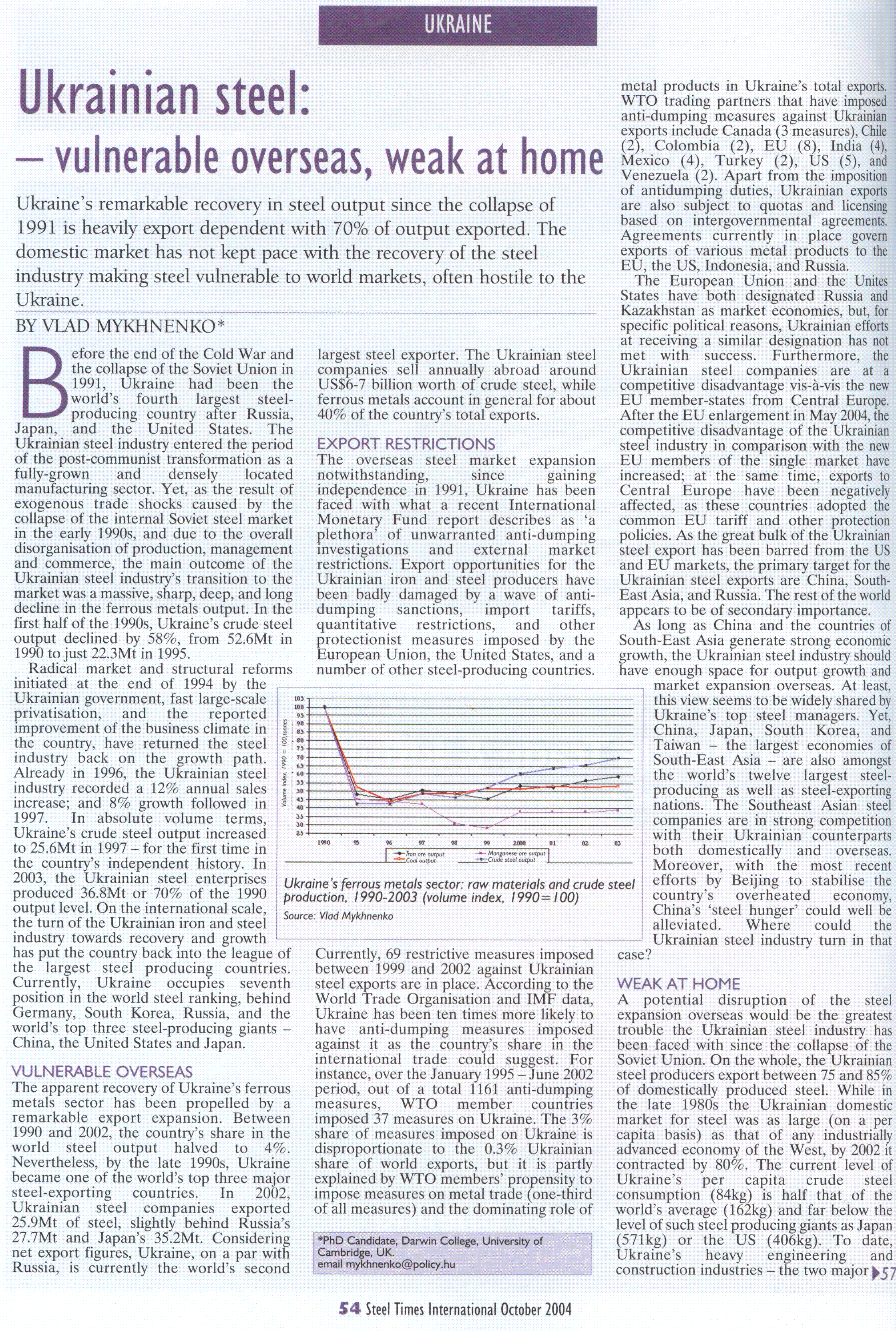
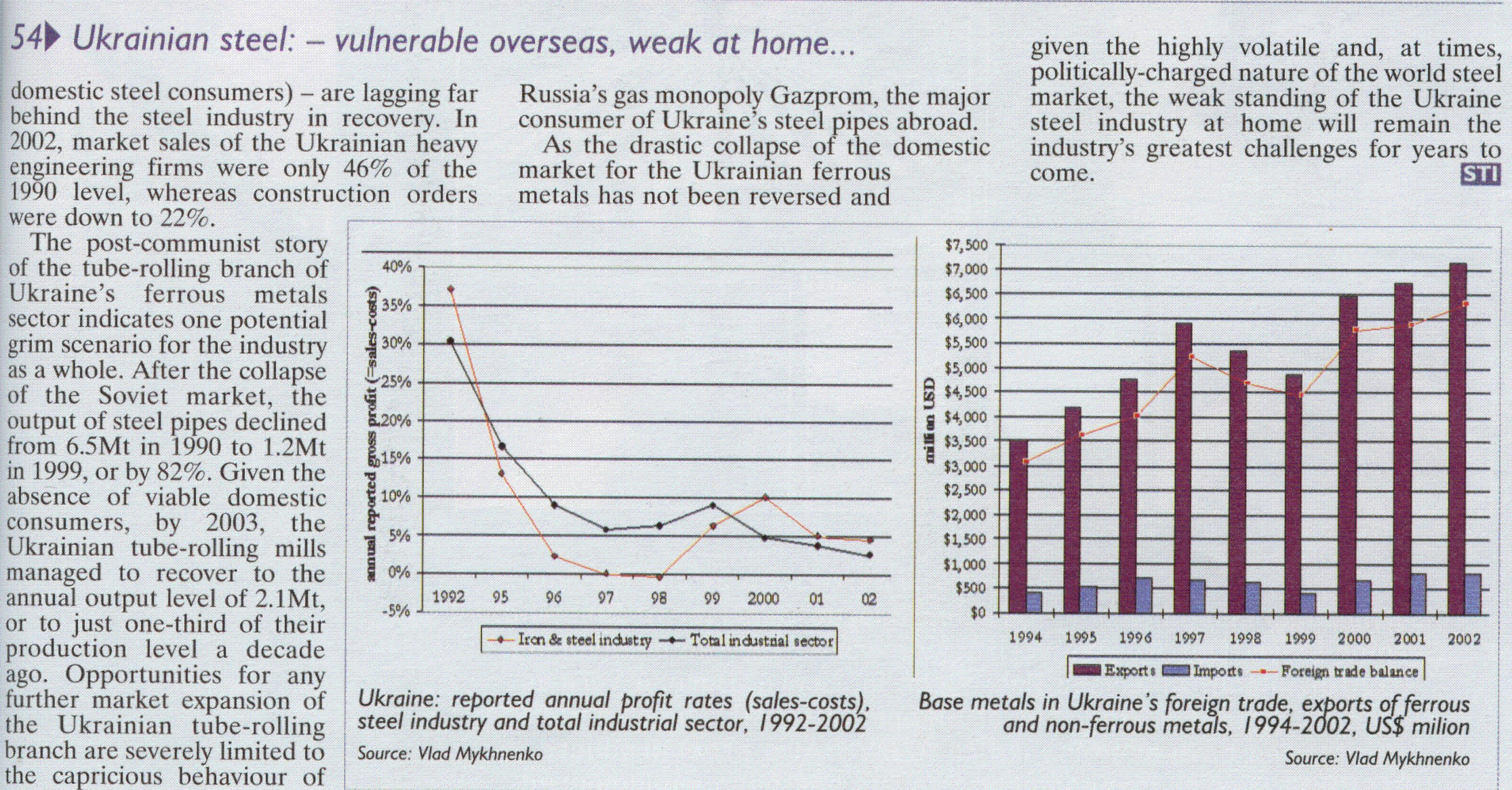
Mykhnenko, V. (2004) Ukrainian steel: vulnerable overseas, weak at home, Steel Times International, Vol. 28, No. 7, pp. 54-57. Click here to download page 54 and page 57.
Mykhnenko, V. (2004) From exit to take-over: the evolution of the Donbas as an intentional community. A paper presented at the European Consortium for Political Research Joint Sessions of Workshops, 13-18 April 2004 Uppsala, Sweden. Click here to download.
Mykhnenko, V. (2003) State, society and protest under post-communism: Ukrainian miners and their defeat, in Mudde, C. & Kopecký, P. (eds) (2003) Uncivil Society? Contentious Politics in Eastern Europe. London: Routledge, pp. 93-113. ISBN: 978-0415265850. Click here
For "My Citations" metrics on Google Scholar, please, click here
[to the top]
COMPLETED RESEARCH PROJECTS
2003-2004: Rusting away? Post-Communist States and the Politics of Steel
My policy research project was conducted at the Open Society Institute International Policy Fellowships Programme in affiliation with the Central European University Centre for Policy Studies in Budapest, Hungary. It focused on the state capacity in leading economic sectors in post-communist Europe, particularly the Ukrainian iron & steel industry.
2005-2008: Cities and Regions: Changing Spatial Imbalances
In collaboration with colleagues at the CPPR, University of Glasgow, I undertook a large research project on understanding spatial economic change and changing urban imbalances in Europe. The project examined the diverse trajectories and variable performance of cities across Western and Eastern Europe, drew out the implications for urban and regional development policy, and engaged with public policy stakeholders. (For some of the media coverage, click the following for The BBC, Guardian, Financial Times, Irish Independent, Newcastle Evening Chronicle).
2006-2008: Neoliberalism, Anti-Neoliberalism, and De-Ideologisation
Jointly with colleagues at the CPPR, University of Glasgow, I ran a special seminar series financed by the UK Economic and Social Research Council. The seminar series considered neo-liberalism an ideology characterised by an antipathy towards state involvement in economic exchange and an emphasis on the benefits of market forces, illustrated the ascendancy of neo-liberal processes, rules and institutions, and highlighted the impact that such an ideology have on social research and policy, especially where it is presented as a technocratic rather than political matter. The seminar series provided a forum in which both senior and junior academics were able to engage in dialogue with each other and with research users, broadly defined. It resulted in the publication of an edited volume on The Rise and Fall of Neoliberalism (see above, Birch and Mykhnenko, 2010).
2009-2012: Shrink Smart - Governance of Shrinkage within a European Context
This collaborative research grant project was funded through the European Union's Seventh Research Framework Programme (FP7). The project was based on comparative case studies from seven cities and conurbations throughout Europe with a focus on disadvantaged urban regions in eastern, southern, and western Europe, suffering from economic decline, population loss, and a lack of social cohesion. The work has provided a basis for analysing different trajectories of shrinkage, understanding the main challenges for the urban economy, and elaborating alternatives for urban governance. (For some of the media coverage, click here). The policy recommendations were duly communicated to the European Commission and other stakeholders on 26 March 2012 (for the details, see CORDIS Wire EUROCITIES). and
2009-2013: COST Action TU0803 Cities Re-growing Smaller - Fostering Knowledge on Regeneration Strategies in Shrinking Cities across Europe (supported by the EU RTD Framework Programme)
The main objective of the Action was to foster the interdisciplinary knowledge of Regeneration Strategies in Shrinking Cities across Europe. By promoting the exchange of scientific knowledge in Europe and stimulating new ideas in selected reference cities, the network has acted as a catalyst for innovative solutions to deal with demographic change and urban decline.
| ONGOING RESEARCH |
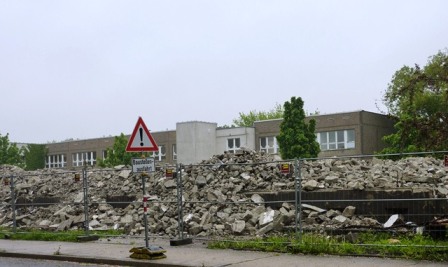
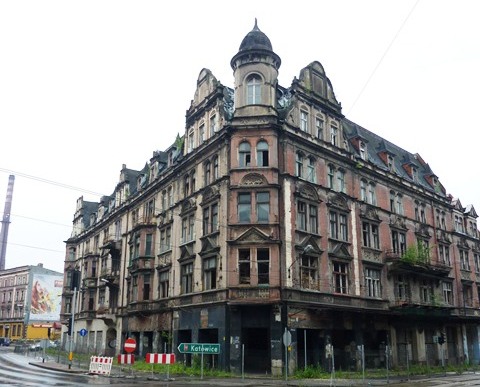
2012: The Urban Shrinkage, Adaptation, and Resilience Initiative
The Urban Shrinkage, Adaptation, and Resilience Initiative was launched in the summer of 2012 following an international shrinking cities networking workshop hosted by the Centre for Urban and Regional Studies (CURS) at the School of Geography, Earth, and Environmental Sciences, University of Birmingham, UK. This initiative is conceived as a multi-disciplinary enterprise set to bring together urban scholars, activists, and practitioners working on new ways and means of building resilient and resourceful cities - urban living environments capable of withstanding and successfully responding to the immediate shocks and long-standing effects of the economic depression, demographic shift, and human-induced climate change [URBAN-SHRINKAGE-AND-RESILIENCE@JISCMAIL.AC.UK].
2016: Socio-Spatial Inequalities (FAPESP grant number: 2015/50414-1). This new collaborative research project with Prof. Eliseu Saverio Sposito, Faculdade de Ciências e Tecnologia, Presidente Prudente, UNESP (Brazil), aims at debating the concepts of exclusion, segregation, fragmentantion, and resilience in the context of Global South.
[to the top]