BARRIERS TO WOMEN'S MICRO AND SMALL-ENTERPRISE SUCCESS IN TURKEY
Draft research report ; please do not cite
Semsa Özar
International Policy Fellow, 2002
Center for Policy Studies, Central European University and Open Society
Institute
Bogazici University, Department of Economics
August 2002
CONTENTS:
I. Introduction
II. Data Collection and Methodology
III. Gender Gap in Employment with a Comparative Perspective
IV. MSE Entrepreneurs by Gender
V. Women Entrepreneurs. Results of the Field Research
VI. Conclusions
References
Appendix
I. Introduction
This research paper aims to investigate the nature and scope of constraints and barriers women entrepreneurs face while starting and/or expanding their micro and small enterprises (MSEs).
Available statistics show that, in Turkey, compared to male entrepreneurs, the number of female entrepreneurs of MSEs is drastically low. Thus, this study attempts to assess the factors that restrain women from entering small business.
In the last three decades promotion of MSEs has been
in the agenda of governmental and non-governmental institutions both in
industrialized and developing countries. Although these agendas have a
number of features in common, basically they have different objectives.
In the industrialized countries MSEs are associated with creating jobs,
human-resource management, creativity and innovation, whereas in the developing
countries they are usually promoted as a means of generating employment,
alleviating poverty and promoting growth. In this context, women are usually
targeted as being the "poorest of the poor".
MSEs, however, are not confined to enterprises of "poor" entrepreneurs.
They encompass heterogeneous units ranging from one-person home-based worker,
to high-tech units providing commodities or service.
Hence the policy suggestions which will be drawn from this study will not only target "poor" women entrepreneurs, but also those with higher opportunities but with some "missing" factors that impede the success of their endeavour. Some women succeed in overcoming many of the constraints and establish successful businesses for themselves and their employees. Hence, this study will seek to identify not only the inhibiting but also facilitating factors faced by woman entrepreneurs.
Section II will present data collection and field work strategies. Section III deals with the position of women in the labor market with a comparative perspective. Here the aim is two fold: The first is to see the rate of participation of women in the labor market with different employment status, compared to men and to give an overview of the relative share of women entrepreneurs in the workforce. The second is to evaluate gender pattern of employment in Turkey in comparison with other countries. Section IV presents an overview of MSEs in Turkey by gender and briefly summarizes the existing literature. Section V evaluates the results of the field research. Conclusions are offered in the final section.
II. Data Collection and Methodology
This study is based on original information drawn from in-depth field interviews and focus group sessions with women entrepreneurs of MSEs. The interviews are conducted in cities where the density of women-owned enterprises vary in number and nature. The interview sites include 9 cities in various geographical regions of Turkey: Bursa, Corum, Diyarbakir, Erzurum, Istanbul, Izmir, Izmit, Mardin and Trabzon. Prospective participants were identified with the aid of a former field study on MSEs carried out by the author of this paper, and with the help received from women's centers, civic groups and MSE owners.
The criteria for selection as a participant include such dimensions as the size of the enterprise, sectoral affiliation, the geographical region in which the enterprise is located and the characteristics of the entrepreneur such as age, educational background, marital status and the number of children.
Examination of the literature on MSEs contributed to the identification of themes for the guidelines used during the interviews and focus groups.
Issues explored with women entrepreneurs include their familial, socio-demographic, and economic background, the factors that facilitated or inhibited their decision to become an entrepreneur, their experiences of entrepreneurship and the particular issues that confront them as women in business. Attention is given not only to economic factors but also to constraints of non-economic factors, especially the diverse dimensions of patriarchy.
Interviews are also conducted with various state offices and public organizations, such as KOSGEB (Small and Medium Industry Development Organization), KUGEM (Small Enterprise Development Centers) KSSGM (Directorate General on the Status and Problems of Women) and with NGOs, such as TOBB (The Union of Chambers of Commerce, Industry, Maritime Trade and Commodity Exchanges of Turkey), TESK (Confederation of Turkish Craftsmen and Tradesmen), TOSYÖV (Turkish Foundation for Small and Medium Business), and Izmit Toplumsal ve Ekonomik Gelişim İçin Kadın Merkezi (Izmit Women's Center for Social and Economic Development) in order to identify their involvement in promoting women's MSEs.
For the purpose of this study the entrepreneur is defined as "one who takes an active role in the decision making and risk taking of a business in which s/he has majority ownership" (Moore and Buttner, 1997:13). The micro and small enterprises (MSEs) that are investigated in this research include the enterprises of self-employed and of employers with up to 50 employees performing in the manufacturing, trade and the service sectors.
Available official and non-official data sources are utilized to evaluate the situation of women entrepreneurs in the MSE sector. However, most of the existing databases on MSEs do not provide the gender of the enterprise owner and/or the size of the enterprise.
III. Gender Gap in Employment with a Comparative Perspective
Since 1970s in many regions of the world there has
been a significant rise in women's participation in the labour force (Standing
1999). Whereas in the 1950's only one third of women in the 20-59 age group
was part of the labour force globally, at present this ratio has reached
approximately 50% (Tzannatos, 1999:552).
It is widely recognised that significant improvement has been achieved
regarding women's position in many countries. However, despite positive
developments in many areas including education and remuneration, women
are still employed in a very restricted number of occupations and are generally
paid lower wages than men (UNIFEM 2000).
Several different groups of countries have been selected with the purpose of studying the situation of women in the Turkish labor market with a comparative perspective: three Mediterranean countries which are members of the European Union, i.e., Greece, Portugal and Spain; two Latin American countries, Brazil and Mexico; two East Asian and Southeast Asian countries, Republic of Korea and Malaysia, respectively; and two countries of North Africa, Egypt and Morocco. It is obvious that these countries are very different from each other in many respects. The following reasons may be cited for their selection for purposes of comparison. The countries in the first group are members of the European Union (EU), of which Turkey wishes to become a member. On the other hand, within the EU, these are the countries closest to Turkey economically and culturally. The Latin American, East Asian and Southeast Asian countries selected are countries that have adopted the import substitution and export based strategies, equally applied in Turkey, at different times and in different fashion. Egypt and Morocco, on the other hand, are those countries within the North Africa/Mediterranean region which are closest to Turkey in terms of GNP. Thus, we will try to assess Turkey's position in comparison with countries which have different economic and cultural characteristics, but resemble Turkey in certain respects as well.
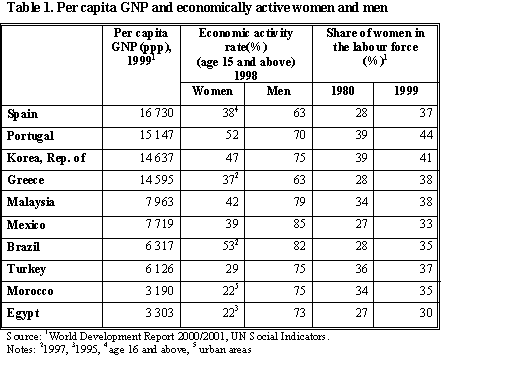
Table 1 presents data for labour force participation for women and men and the share of women in the overall labour force for the years 1980 and 1999 in order to trace change over two decades. We see that compared to men, women participate in the labour force at a lower rate in every country, but that in some countries such as Turkey the gap between women and men is significantly wider.
Men's participation in the labour force varies between
63-85% and differences are not marked between countries. On the other hand,
women's participation varies across the range 20-53%. Within the overall
picture, Turkey is situated at the lower levels, leading only Egypt and
Morocco. In countries somewhat closer to Turkey with respect to GNP per
capita like Brazil, Malaysia and Mexico the participation of women in economic
activities is significantly higher than that for Turkey.
It can be observed that, in many countries, the share of women within the labour force has undergone a significant change over the years. In Turkey, on the other hand, this share rose only slightly from 36% to 37% during the last two decades. Nonetheless, when we study the data for 1999, we see that the level of 37% for the share of women in the labour force is higher than that for many countries. In order to analyze this situation at a deeper level, one has to look into the status of employment (Table 2).
Table 2 divides the working population into the three
categories of wage and salaried, self-employed and employer , and unpaid
family worker. When compared to all the other countries, Turkey is the
one where the share of wage and salaried employment is the lowest within
the working population, for both women and men. Turkey is also the country
where women are employed as unpaid family worker proportionally more than
any other. An overwhelming majority of women having the status of unpaid
family worker are those who, in agriculture, work on land owned by their
husbands or fathers. Of women who work as unpaid family workers only 5.3%
work in the urban sector (SIS, 2000).
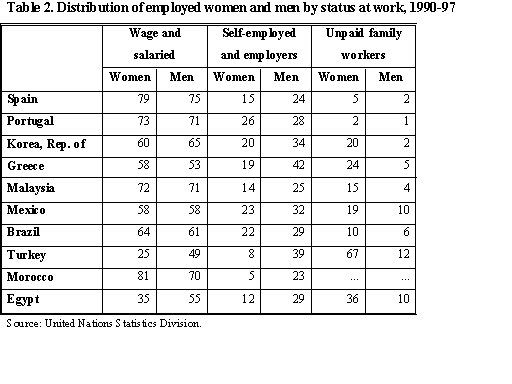
As it can be followed from Table 2, in Turkey, women
participate in the labor market at a very low level as self-employed and
employers, i.e., as entrepreneurs. Turkey stands at the lowest level after
Morocco, with a share of 8% women entrepreneurs in women's total employment.
In the next section, the focus will be on Turkey and on women and men
entrepreneurs in urban and rural areas.
IV. MSE Entrepreneurs by Gender
MSE studies in Turkey
Most of the studies on MSEs and SMEs (Small- and Medium-Sized Enterprises) in Turkey have concentrated specifically on the manufacturing sector and their role in industrialization and economic growth. As a result, the focus has been on technologies, productivity, R&D, marketing and competitiveness (Aktan 1998; Kaytaz, 1995; Kuruuzum 1998; Taymaz, 1997).
First studies on women entrepreneurs in Turkey have been published in the beginning of 1990s. While studies on MSEs without a gender perspective concentrated on the issues related to the performance of the business, research on women entrepreneurs focused primarily on the descriptive characteristics of the entrepreneur, their role attitudes in the enterprise and in the family, that is, their relations with their employees, business colleagues and with their family members (Celebi, 1997; Celebi et al, 1993; KOSGEB, 2000). Very few studies intended to identify problems and provided proposals and programs to facilitate and promote entrepreneurship among women (DGSPW, 1993 and1996).
Statistical Evidence
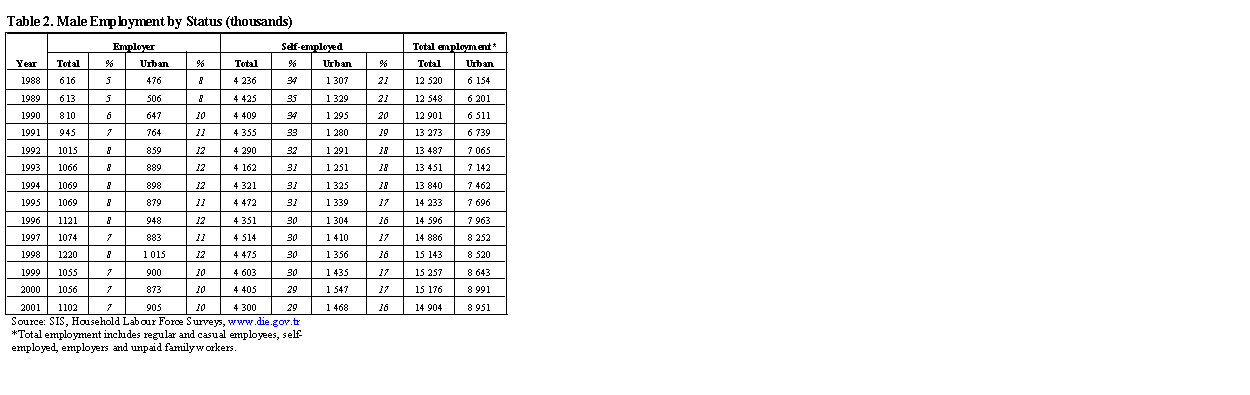
The official statistics show that the number of women's enterprises increased from 371 000 to 779 000 between 1988-2002, which accounts for a rise of 109%, whereas men-owned enterprises increased from 4 852 000 to 5 402 000 indicating an increase of 11% (Appendix 1). An analysis of the situation in the urban areas however, show that in the same period, the increase in the number of women-owned enterprises was from 127 000 to 215 000 with a rate of 69%, whereas men-owned enterprises increased from 1 783 000 to 2 373 000 with a rate of 33%. The dramatic rise observed in women-owned enterprises in the rural areas might be an outcome of the transformation experienced in the agricultural sector. As Ozbay (1994:13) puts it: "rural marginalization results in the feminization of agriculture in Turkey". Furthermore, even though the rise in women-owned enterprises in overall Turkey in general and in urban areas in particular has been higher than the rise in men-owned enterprises, still the share of women-owned enterprises in total is 15%. And this share drops to 10% in the urban areas. Those figures, however, should be evaluated in caution. First, it is more likely that more women than men entrepreneurs are engaged in informal activities and second, some activities carried out primarily by women are not acknowledged by the official statistics and thus, women's participation might be reflected to statistics misleadingly low (Ozbay, 1994; Charmes, 1999). On the other hand, it is well-known that a notable number of enterprises are registered legally as owned by women, whereas in essence run by men
Table 3 gives the distribution of women and men enterpreneurs
in terms of the size of the enterprise measured by the number of employees.
The categorization of the statistics, however, do not allow us to see the
distribution of women/men entrepreneurs below and above the size of 50
employees. Nevertheless, it can be observed that women are primarily concentrated
in self-employment. Women entrepreneurs working on their own constitute
61% of total employer and self-employed women whereas this figure is only
30% among men entrepreneurs.
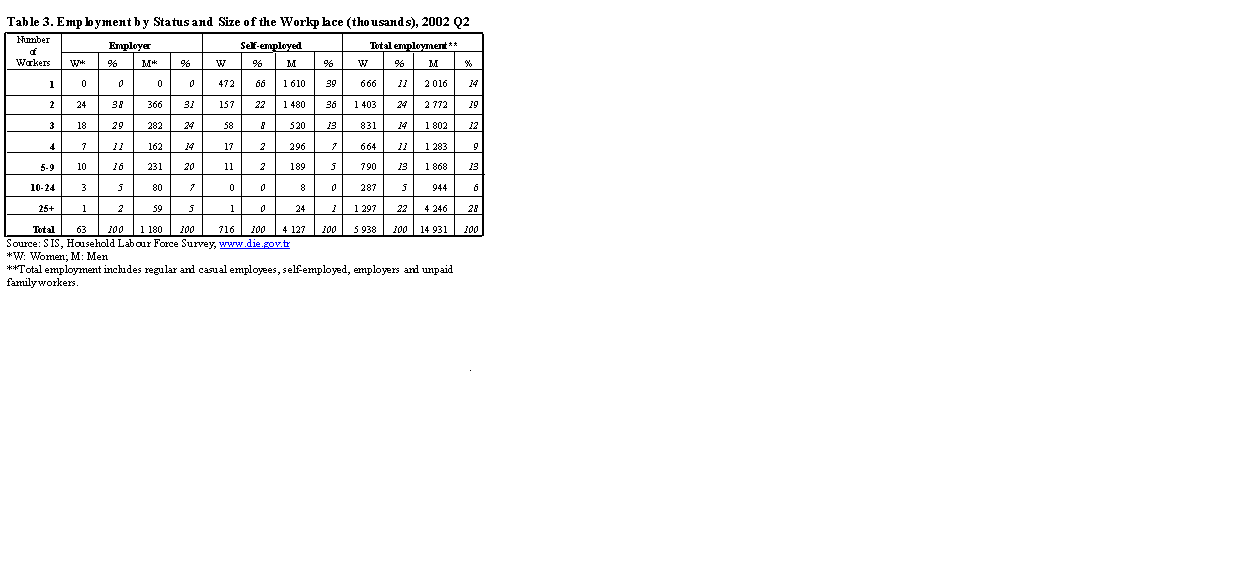
Among the employers women are more likely to have micro enterprises with 2 or 3 employees. 94% of women employers and 89% of men entrepreneurs have micro enterprises with less than 10 employees. These figures indicate that the vast majority of enterprises are microenterprises.
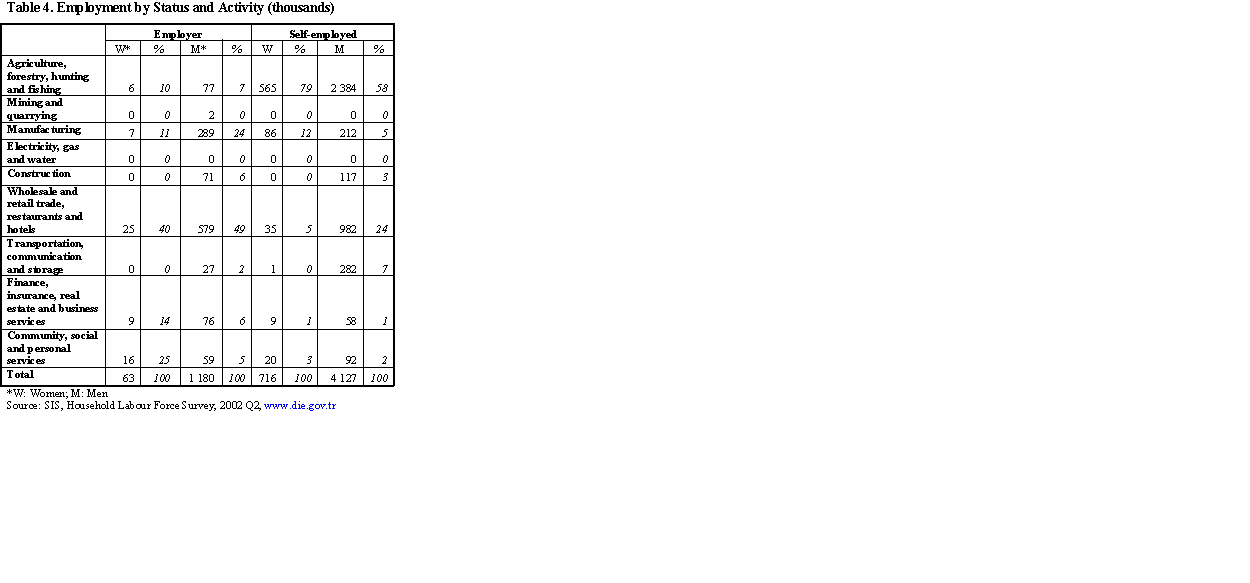
It is well-documented that in the labor market, as employees or employers, women and men tend to concentrate in different sectors. Mead and Liedholm (1998: 64) observed that in the developing countries while men's enterprises are more evenly distributed and over a wider range of activities, women's MSEs are usually confined to a narrow range of activities such as knitting, sewing, cooking and retail trading.
Table 4 shows that majority of self-employed women are engaged in agricultural activities. No women employers are found in the mining and construction sector.
V. Women Entrepreneurs. Results of the Field Research
In this section, the issues that are being explored in the field survey are presented:
A. Why a women wants to become an entrepreneur?
This section will analyze the intentions of women while starting their business.
Cultural and social environment
References
Aktan, Okan (1998) "Customs Union: Impact on Small and Medium Sized Enterprises," in Turkish Small and Medium Sized Enterprises in the Integration Process of Turkey with the European Union: Implications and Consequences, edited by Yavuz Tekelioglu, Friedrich Neumann Foundation and Akdeniz University Faculty of Economics and Administrative Sciences, Ankara.
Aktar, Ayhan (1990) Kapitalizm, Az Gelismislik ve Türkiye'de Küçük Sanayi (Capitalism, Underdevelopment and Small Industry in Turkey), Afa, Istanbul.
Celebi, Nilgun (1997) Turizm Sektorundeki Kucuk Isyeri Orgutlerinde Kadin Girisimciler, (Women Entrepreneurs of Small Enterprises in the Tourism Sector), Directorate General on the Status and Problems of Women, Ankara.
Celebi, Nilgun, B. Tokuroglu and A. Baran (1993) Bagimsiz Isyeri Sahibi Kadinlarin Aile ve Is Iliskileri (Family and Business Relations of Women Owning Autonomous Enteprises), T.C. Basbakanlik Kadin ve Sosyal Hizmetler Mustesarligi Yayinlari. No.76, Ankara.
Charmes, Jacques (1999) Gender and Informal Sector, contribution to The World's Women 2000, Trends and Statistics, United Nations, New York.
Cinar, E. Mine, Mehmet Kaytaz and Günar Evcimen (1987) "A Case Study on the Growth Potential of Small Scale Manufacturing Enterprises in Bursa, Turkey," METU Studies in Development, Vol.14, No.2, pp.123-146.
DGSPW (Directorate General on the Status and Problems of Women) (1993) Proceedings of the Plenary Session on Encouraging and Supporting Women Entrepreneurship, General Directorate for the Status and Problems of Women, Ankara.
DGSPW (Directorate General on the Status and Problems of Women) (1996) Supporting Women-Owned Businesses in Turkey: A Discussion of Needs, Problems, Opportunities, and Strategies, by Development Alternatives Inc. and the Strategic Research Foundation, Ankara.
Ecevit, Yildiz (1993) "Kadin Girisimciliginin Yayginlasmasina Yonelik Bir Model Onerisi (A Proposal for a Model for the Development of Women Entrepreneurship)," in Proceedings of the Plenary Session on Encouraging and Supporting Women Entrepreneurship, General Directorate for the Status and Problems of Women, Ankara.
Kaytaz (1995) "The Development and Nature of Small and Medium-Scale Manufacturing Enterprises in Turkey," in Turkey: Political, Social and Economic Challenges in the 1990s. edited by Cigdem Balim et al., E.J. Brill, Leiden.
KOSGEB (2000) Kadin Girisimcilerin Sosyo-Kulturel ve Ekonomik Profili. Ankara Ornegi. (Socio-Cultural and Economic Profile of Women Entrepreneurs. Ankara as a Case) by Hatun Ufuk and Ozlen Ozgen, Ankara.
Kuruuzum, Orhan (1998) "SMEs in Turkey: A Structural Evaluation," in Turkish Small and Medium Sized Enterprises in the Integration Process of Turkey with the European Union: Implications and Consequences, edited by Yavuz Tekelioglu, Friedrich Neumann Foundation and Akdeniz University Faculty of Economics and Administrative Sciences, Ankara.
Mayoux, Linda (1995) 'From Vicious to Virtuous Circles' Gender and Micro-Enterprise Development? Occasional Paper No 3, UN 4th World Conference on Women, UNRISD, Geneva.
Mead, Donald C. and Carl Liedholm (1998) "The Dynamics of Micro and Small Enterprises in Developing Countries," World Development, Vol.26, No.1, pp. 61-74.
Meyer, Gunter (2000) Survival of Small-scale Manufacturing in Cairo during Structural Adjustment - Results from a Long-term Study, mimeo.
Moore, Dorothy P. and E. Holly Buttner (1997) Women Entrepreneurs. Moving Beyond the Glass Ceiling. Sage Publicatons, California.
MÜSIAD (1997) Orta Büyüklükteki Isletmeler ve Bürokrasi (Medium-Sized Enterprises and Bureaucracy),MÜSIAD Yayinlari, Istanbul.
Otero, M. (1994) "The Role of Governments and Private Institutions in Addressing the Informal Sector in Latin America," in Contrapunto: The Informal Sector Debate in Latin America, edited by Cathy A. Rakowski, SUNY Press, Albany, pp. 177-97.
OECD (1998) Women Entrepreneurs in Small and Medium Enterprises, OECD, Paris.
Özbay, F. (1994). "Women's Labor in Rural and Urban Settings", Bogaziçi Journal, Vol.8, No.1-2.
Ozar, Semsa (2000) "Employment Aspects of the Informal Sector in Istanbul. A Field Survey in Low-Income Neighborhoods of Istanbul", in Informal Sector II, edited by Tuncer Bulutay, State Institute of Statistics (SIS), Ankara.
Ozcan, Gul Berna (1995) Small Firms and Local Economic Development, Avebury, Aldershot.
Reddy, Uma (1998) "The Dialogue Between the OECD Countries and the Transition and Developing Countries: An Indian Experience" in OECD 1998.
SIS. Household Labour Force Surveys, www.die.gov.tr.
Standing, G. (1999). Global Feminization Through Flexible Labor: A Theme Revisited", World Development, Vol.27, No.3, pp.583-602.
Taymaz, Erol (1997) Small and Medium-Sized Industry in Turkey, SIS, Ankara.
TUSIAD (Turkish Industrialists'and Businessmen's Association) (1987) Türkiye'de Girisimcilik ile Ilgili Sorunlar ve Çözümler,(Entrepreneurship in Turkey: Problems and Solutions), TÜSIAD, Istanbul.
Tzannatos, Z. (1999). "Women and Labor Market Changes in the Global Economy: Growth Helps, Inequalities Hurt and Public Policy Matters", World Development, Vol. 27, No.3, pp. 551-569.
UNDP (1997) UNDP Microfinance Assessment Report for Turkey, prepared as a component of the Microstart Feasibility Mission by Kim Wilson, Alper Guzel and Erol Taymaz.
UNIFEM (2000). Progress of the World's Women 2000, United Nations Development Fund for Women, UNDP, Washington D.C.
Weiler, Stephan and Alexandra Bernasek (2001) "Dodging the glass ceiling?
Networks and the new wave of women entrepreneurs," The Social Science
Journal,
Vol. 38, No.1, pp. 85-103.
World Development Report 2000/2001, The World Bank, Washington, D.C.
Appendix 1: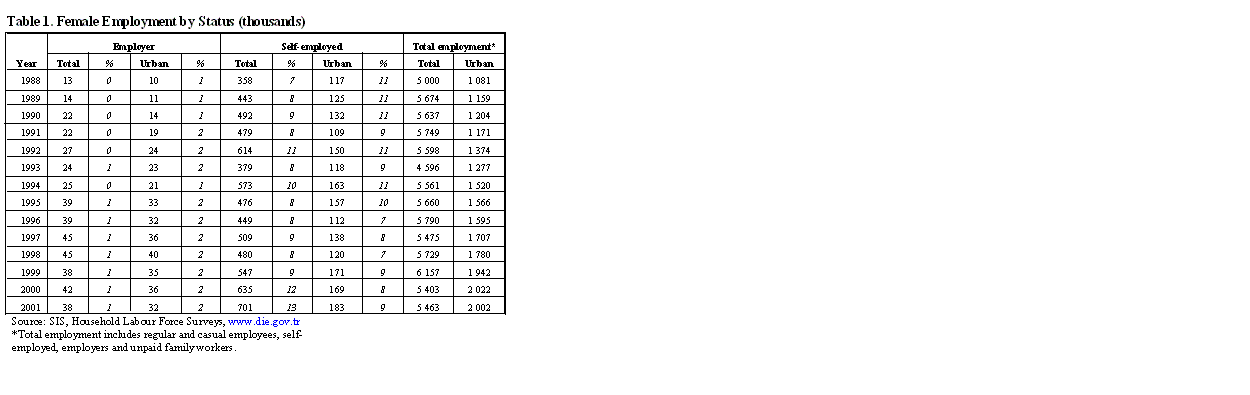
Appendix 2: